
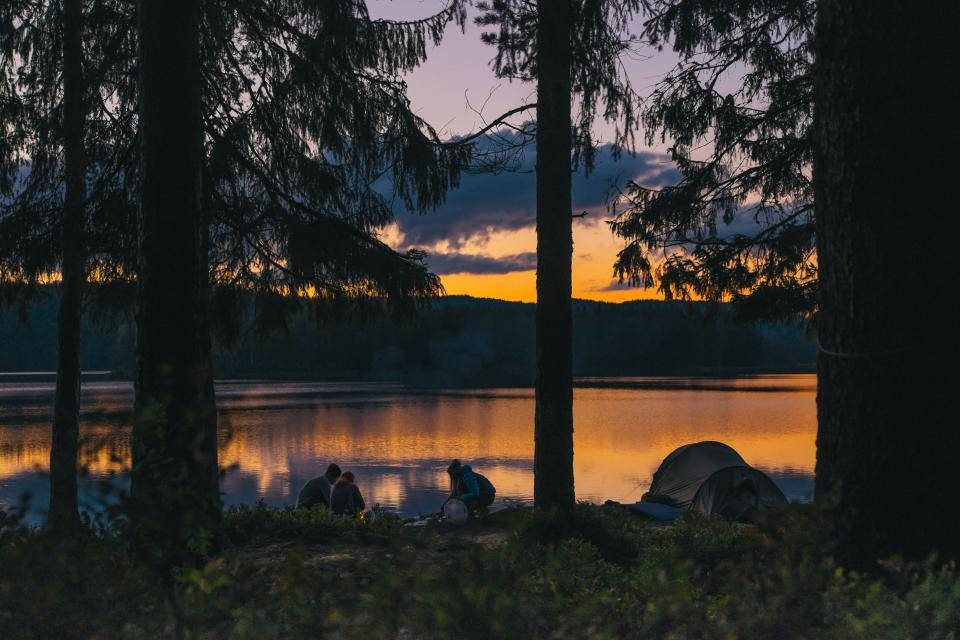
September and October might be our favourite time to camp with kids. The campgrounds empty out after the first weekend of school, the bugs are mostly gone, the lakes are still warm enough for a brave swim, and the trees do the thing they do. The trade-offs are real, though: nights that dip toward freezing, a sun that sets before dinner is finished, and campgrounds that close their taps, their showers and sometimes their gates without much notice. Here is how we adapt a summer routine into a fall one, and why we think it is worth it.
Plan around the daylight, not the clock
The biggest change from summer is not the cold. It is the dark. In mid-October, at the latitude of the northern United States and southern Canada, sunset lands around 6:30 p.m. and it is properly dark by 7:15. By early November it is closer to 5 p.m. That means the whole evening routine you built in July, with dinner at 7 and the fire until 9:30, now happens in the dark.
We move everything earlier. Arrive by 2 p.m. so the tent is up and firewood sorted in daylight. Eat dinner at 5. Have the headlamps on the picnic table before you need them, not in the bottom of a bag. Bring a lantern that lights the whole cooking area rather than relying on headlamps alone; cooking a group meal by the light of one headlamp with a six-year-old “helping” is a good way to spill the pot. The long evenings are actually one of the joys of fall camping, but only if you have planned for them: cards, a book read aloud, a walk with the lights off to look at the stars, which are far better in October’s clear dry air than in humid July.
Sleeping warm is a system, not a bag
A summer sleeping bag rated for 10 degrees C (50 F) is not going to work on a night that drops to 2 degrees C (36 F), which is common in fall at any elevation above a few hundred metres. But before you buy new bags for the whole family, look at the ground. Most of the heat you lose at night goes into the earth. A sleeping pad with a good insulation rating, or a foam pad layered under an inflatable one, makes a bigger difference than you would believe. We have watched kids sleep happily in their summer bags on a doubled-up pad at 3 degrees C (37 F).
The rest of the system: a fleece or wool base layer worn to bed, a warm hat, dry socks put on right before getting into the bag, and a hot water bottle. A standard 1 litre (34 oz) bottle filled with hot water from the stove, sealed tight and wrapped in a sock, stays warm for hours at the bottom of a sleeping bag. Kids treat it as a treat rather than a survival tool, which it is.
Do not go to bed cold. Ten minutes of walking or a few jumping jacks before getting into the bag warms the body enough that the bag has heat to trap. And eat something before bed; a small snack with fat and carbohydrate gives the body fuel for the night.
Clothes: layers, and a lot of them
A fall day can start at 4 degrees C (39 F) with frost on the fly and reach 18 degrees C (64 F) by lunchtime. Kids need to be able to peel and add layers all day without a full costume change. A synthetic or wool base layer, a fleece, a warm insulated jacket and a rain shell cover almost everything. Add a warm hat, gloves and two pairs of warm socks per day, because wet feet in fall are miserable in a way they are not in July.
The one thing we always run short of is dry gloves. Kids lose them, drop them in the lake, and use them to pick up wet wood. Bring more than you think you need and keep the spares in the car.
Check what is actually open
Many campgrounds shift to a reduced service season after the first weekend of September or after Thanksgiving in early October in Canada, and by late October a lot of them have shut the water off entirely to protect the pipes from freezing. That means no taps, no flush toilets, sometimes no showers, and often no staff. Some stay open on a self-registration basis with a drop box for fees; others close the gate outright.
So before you go: confirm the campground is open on your dates, confirm whether water is available, and confirm the reservation system, since some switch from bookable to first-come, first-served in the shoulder season. Plan to bring all your water if in doubt, roughly 4 litres (a gallon) per person per day, plus extra for washing. And bring a shovel and a bag if the toilets are closed.
The fire matters more, so do it well
In summer the fire is entertainment. In fall it is the living room. We build it earlier, keep it going longer, and bring or buy more wood than we think we need, usually a bundle or two more per evening than in July. Find out the rules on firewood: many regions forbid bringing wood from outside the area to stop the spread of tree pests, so buy it locally or on site. Check the fire danger rating too; a dry September can still bring a fire ban even when the air feels cool.
Dry kindling is harder to find in a damp fall forest, so bring your own: a bag of dry sticks from home, a few firelighters, or a small block of fatwood. The kids can take over the fire more than in summer because everyone is sitting closer and watching. The rule at our camp is that nobody adds wood without an adult saying so, and the fire is out cold, with water and stirring, before anyone goes to bed.
Why bother
The list of fall rewards is long, and it makes up for the cold hands:
- Nearly empty campgrounds, quieter loops and your pick of the lakeside sites
- No mosquitoes or blackflies after the first frost
- Foliage at its best from late September to mid October in most northern forests
- Crisp, clear night skies and a chance to see the Milky Way with the kids
- Lakes that are still swimmable in early September, often warmer than in June
- Reduced fees at many campgrounds during the shoulder season
Fall camping asks a bit more of you: earlier arrivals, a better sleep system and a bit of research on what is open. In return it gives you the forest at its most beautiful and, most nights, entirely to yourselves. Our kids now ask for the October trip before the July one.