
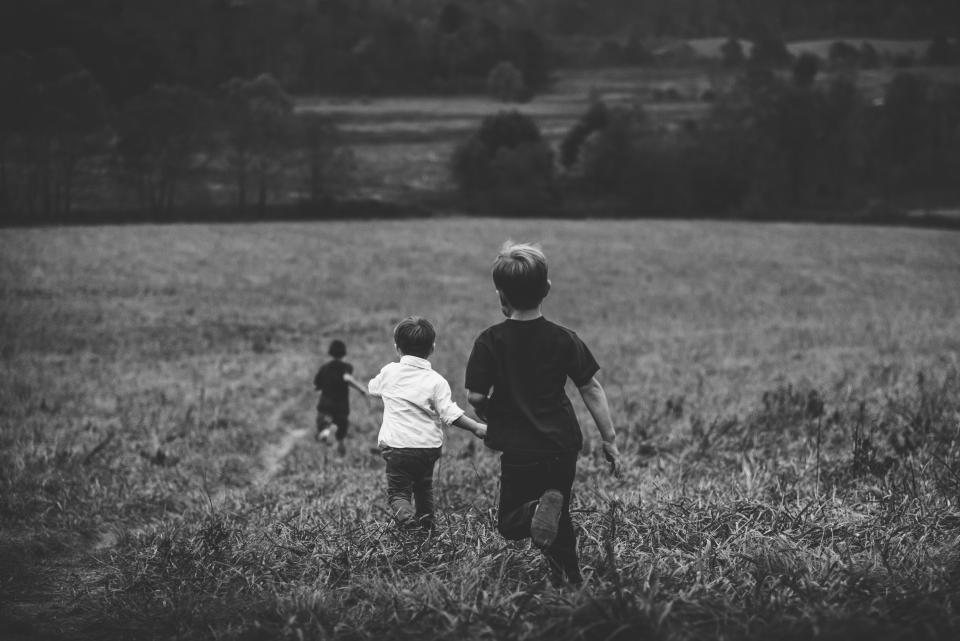
Every campground we have ever stayed at has a version of the same scene: it is the hour after dinner, the dishes are drying on the picnic table, and a loose crowd of kids from four or five different sites has somehow found each other. Nobody planned it. Somebody says “capture the flag?” and the evening is sorted. The three games in this article have survived for generations because they need nothing but people, a bit of space and a few agreed rules. The trouble is that everyone remembers the rules slightly differently, and the first ten minutes usually vanish in arguments. So here is our written-down version of each one, with the variations we use for mixed ages, plus the small safety habits that let the grown-ups relax with a coffee instead of refereeing.
Setting up a fair playing field
Before any of these games, walk the ground once in daylight. Campgrounds are full of things that do not belong in a running game: fire rings, guy lines, tent pegs, low branches, the edge of the boat ramp. We use a simple rule that the playing area is the open grass plus one strip of trees, and never crosses a road or another family’s site. Mark the boundary with something visible, such as a row of pine cones or a towel on a stake, and tell the youngest players first, because they are the ones who will end up in the next site’s tent otherwise. A good field for six to twelve players is about the size of two campsites, roughly 30 by 40 metres (100 by 130 feet). Larger groups can take a whole loop of the campground, but then you need one adult who stays visible in the middle.
Mixed ages are the norm at a campground, not the exception. The easiest fix is to pair the youngest with an older “buddy” who cannot be tagged while holding hands with their partner. It sounds soft, but it keeps six-year-olds in the game for a full hour instead of five tearful minutes.
Capture the flag: the version that ends arguments
Split into two teams and divide the field in half with a clear centre line, such as a rope on the grass or the line between two trees. Each team hides a flag (a bandana works, and so does a bright sock) in its own half. The flag must be visible from at least three metres (ten feet) away and cannot be buried or held. Each team also chooses a “jail,” a tree or a picnic table on its own side.
The aim is to run into enemy territory, grab their flag and carry it back over the centre line. You are safe on your own side. On the enemy side, a single tag by any defender sends you to their jail. Prisoners stand at the jail and can be freed by a teammate who reaches them untagged; both walk back to their side with a free pass. That free pass detail matters, because without it the game stalls with everyone in jail. If the flag carrier is tagged, the flag is dropped where it fell and play continues from there.
Two house rules we recommend: no guarding within five steps of your own flag, which stops the game turning into a standoff, and a time limit of twenty minutes per round, after which the team holding the most prisoners wins. Rounds keep the energy up and let latecomers join between games.
Flashlight tag: the after-dark favourite
This is tag played once it is properly dark, so it works best from late June onwards in the north, when the sky is finally black by about 10 p.m., and much earlier in the shoulder seasons. One person is “it” and holds the only flashlight. Everyone else scatters while “it” counts to thirty with eyes closed. A player is caught when the beam lands on them and “it” says their name out loud. Seeing a shape is not enough; you have to identify who it is. Caught players either join “it” as helpers with their own lights or sit out until the round ends, depending on how long you want each round to run.
Safety is mostly about the field. We use a smaller boundary at night than in daylight, keep it to the open grass, and ban the tree strip entirely. Everybody wears shoes, and the fire ring is out of bounds by a margin of three metres. Headlamps set to red, or a small glow stick clipped to a shirt, help the adults keep track of the youngest without spoiling the game. Ten to fifteen minutes per round is plenty; after that, the “it” player is worn out and it is time to swap.
Kick the can: hide and seek with a comeback
Kick the can is the game most adults half remember and children have rarely played, which makes it the best of the three to teach. Place an empty can (or a plastic bottle weighted with a little water) in the open, on a flat spot. The “guard” counts to fifty while everyone hides. The guard then hunts, and when they spot someone, they run back to the can, tap it and call the hider’s name and location. That player is captured and sits near the can.
Here is the twist that makes it brilliant: any free player who sneaks in and kicks the can releases every prisoner, and the guard has to count again. The guard is torn between hunting and defending, and the hiders are torn between staying safe and staging a rescue. The round ends when everyone is captured, or after a set time, and the first person caught becomes the next guard.
- Use a soft-drink can flattened slightly so it does not roll off downhill into the lake.
- Place the can at least ten metres (thirty feet) from any fire, vehicle or tent.
- Limit hiding spots to the boundary you agreed on, and never inside anyone’s tent or camper.
- Agree on a call, such as “olly olly oxen free,” that ends the round and brings everyone in.
Keeping it fun across a whole week
These games get better with repetition. By the third evening, kids have favourite hiding spots and strategies, and the teams shuffle themselves without adult help. We rotate: capture the flag while there is still light, then flashlight tag once the sky is dark, with kick the can as the daytime game on a slow afternoon. If a family from another site wants to join, welcome them; the games scale from four players to twenty without changing the rules.
Keep a few things in the car for game nights: two bandanas in different colours for flags, a couple of spare flashlights with fresh batteries, a rope about 15 metres (50 feet) long for a centre line, and a bag of glow sticks. That is the entire kit. Finally, respect quiet hours, which at most campgrounds begin somewhere between 10 and 11 p.m. Flashlight tag is a whispering game by then, and that is part of its charm.