
A good camping packing checklist covers six areas: shelter, sleep, kitchen, clothing, safety and small comforts. Pack by category, not by room, and check items off as they go into the car. You will spend less time packing and less time hunting for the can opener at dusk.
Why does a checklist beat packing from memory?
Packing from memory fails in the same place every time. You remember the tent. You forget the mallet, the lighter or the pillows.
A written list fixes that. An organized list that you check off as you go keeps you from forgetting small things.
Car camping gives you room, but room is not a reason to bring everything. Part of the point of camping is simplicity. Start with the essentials. Add comforts only after the basics are in the car.
Use a paper list or a phone note. Keep it saved. After every trip, fix it. Cross out what you never touched. Add what you wished you had.
What goes in the shelter and sleep kit?
Shelter and sleep come first. A bad night makes every other part of the trip harder.
- Tent, rainfly and footprint or ground cover
- Stakes, guy lines and a mallet
- A tarp for rain and shade
- Sleeping bags or bedding for each person
- Sleeping pads or air mattresses, plus a pump if needed
- Pillows, one per person
- Earplugs, for light sleepers
Match the bedding to the season
Check the overnight low before you pack. Cold nights call for warmer bags and thicker pads. Warm nights may call for a light blanket and a small battery fan.
Keep bedding dry and easy to reach
Stuff sacks or compression sacks help you store bedding during the day. Put bedding in the car last, so it comes out first at camp. Then the kids can build their sleeping spots while you finish the kitchen.
Do a test pitch at home if the tent is new. It is much easier to find a missing pole in the yard than at a campsite.
What do you need for the camp kitchen?
Kitchen gear is where most families overpack or underpack. Aim for a simple setup that can cook a hot meal and clean up fast.
- A portable camp stove and fuel
- Lighter and matches
- A frying pan and a pot
- A knife, a cutting board and a can opener
- Plates, bowls, cups and utensils for everyone
- A cooler with ice
- Water containers
- Dish soap, a sponge and a wash bin
- Trash bags and paper towels
Do not count on the campsite grill
Not every campsite has a charcoal grill, so a portable stove is a safer way to guarantee hot food. Fire rules can also change with the weather, which makes a stove even more useful.
Pack the kitchen in bins
Stackable bins or crates keep food and kitchen supplies organized in the car. They also make setup faster. Pull out the bin, set it on the table and start cooking.
Label the bins. A bin marked kitchen is easier to find than three unmarked boxes.
What should the family wear and carry?
Weather can be unpredictable, so pack clothes that layer. Choose items that mix and match, not outfits for every hour.
- Base layers and a warm mid layer
- A rain jacket for every person
- Extra socks, since wet feet end a good day
- Sturdy shoes plus camp shoes or sandals
- A hat for sun and a warm hat for evenings
- Sleepwear
- Swimwear if water is nearby
Sort by activity
Group clothes by activity, such as hiking, lounging and sleeping. Soft-sided bags save space and keep you from digging through everything each morning. Give each child their own bag, so they can find things alone.
Sun and bugs
Sunscreen matters if you will spend long hours outside. Sun-protective clothing helps, especially near water. Add insect repellent to the same pouch so both are easy to grab.
What small items save a trip?
These are the items people forget. They are also the ones that fix problems fast.
- A first aid kit with bandages, pain relief, allergy medicine and any personal prescriptions
- Headlamps or flashlights for each person, plus spare batteries
- A multi-tool
- A camp lantern
- Camp chairs and a table
- Binoculars for birds and distant views
- Cards, a ball and a few simple games
- Phone chargers and a power bank
- Printed directions and a paper map
Check the first aid kit before you leave
Basic first aid supplies can soothe small cuts and bug bites. They can also hold you over until you reach a medical facility. Open the kit at home. Replace anything used or expired.
Go offline on purpose
Assume you will lose signal. Download maps, music and a few movies for rainy hours before you leave. A paper map still works when the battery does not.
Keep a grab bag near the driver
Pack a small bag with water, snacks, sunglasses and a charger within reach of the front seat. Long drives with kids go better when snacks are close.
How do you load the car so setup is fast?
Load in reverse order of use. What you need first at camp goes in last.
- Heavy, rarely needed items go in first, along the back.
- Kitchen bins and the cooler go next, where you can reach them.
- Tent and tarp go near the door or hatch.
- Bedding and clothes bags fill the gaps.
- The grab bag and first aid kit ride up front.
Keep outdoor gear in one easy-to-reach bin by the door. When you pull in, you can set up in minutes. Then everyone can relax.
One last step before you leave home: walk the list one more time. Do it with the car open and the list in hand. Check the items off against what is in the trunk, not against what you think you packed.
After the trip, unpack right away. Dry the tent. Wash the kitchen bin. Refill the first aid kit. Next time, packing takes half the effort.
Related reading
- Campground Etiquette: Quiet Hours, Generators, Dogs and Lights
- How to Choose a Family Tent That Actually Fits Your Family
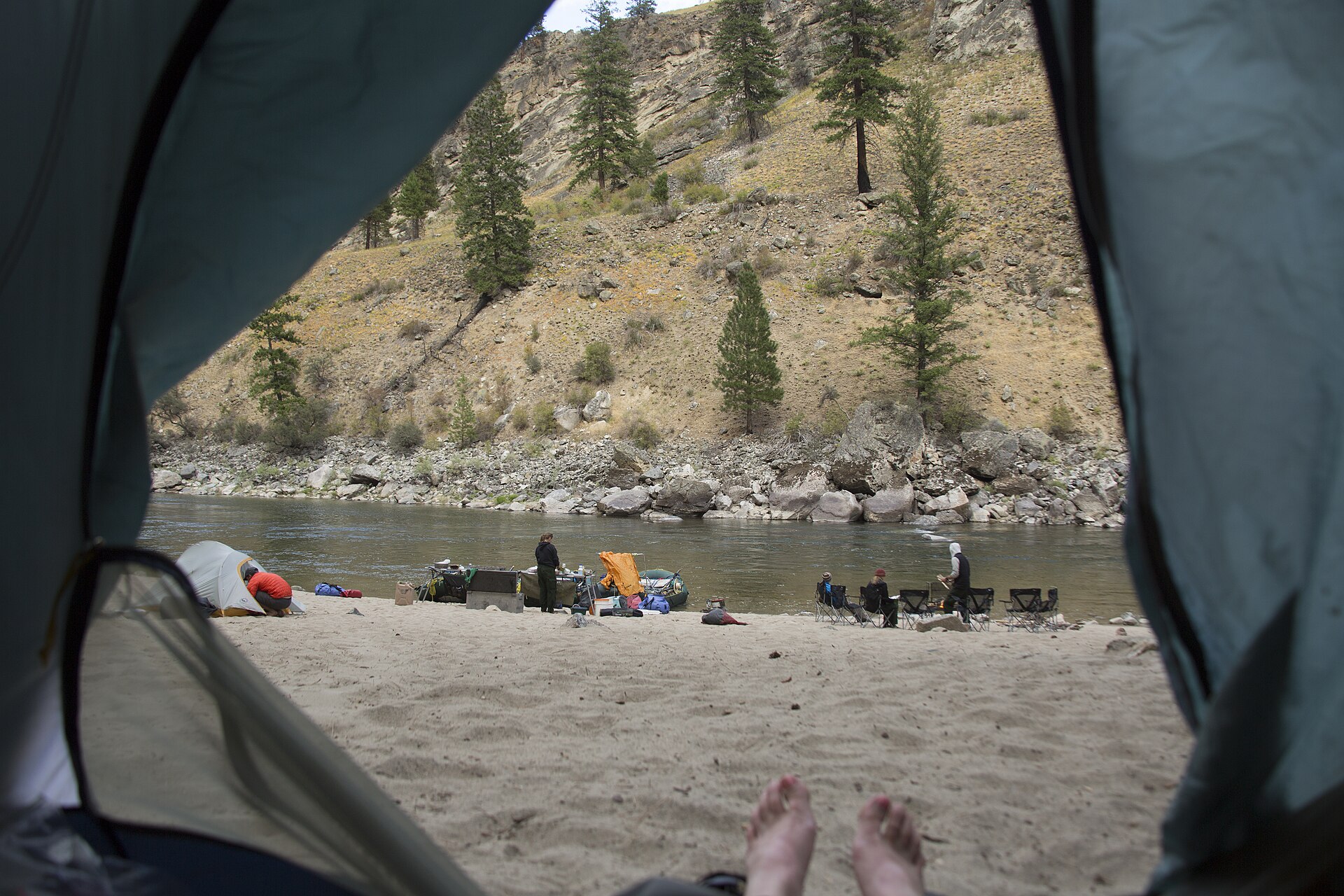
Photo: Tent View on the beach ET5A6630 (29323327804), by Intermountain Forest Service, USDA Region 4 Photography, Public domain (Wikimedia Commons)