
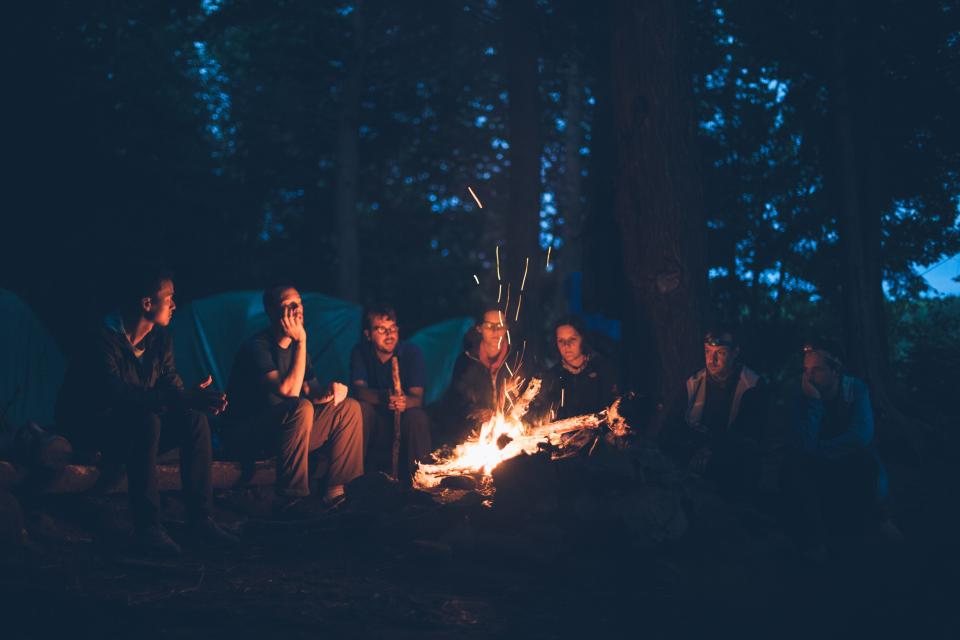
Three families, nine kids, two dogs and a group site for a long weekend sounds like either the best trip of the summer or a slow-motion disaster. We have done both versions. The difference between them was never the weather or the campground. It was whether anyone had thought, before the trip, about who was cooking what, who was buying what, and what happens when one family wants a 6:30 a.m. hike and another wants coffee at 9. Here is the structure we now use for any trip with two or more families, refined over a lot of summers and a few arguments.
One person holds the plan
Group trips fail by committee. Somebody needs to be the organiser: the one who books the site, sets the dates, sends the plan and makes the final call when there is no consensus. This is not a dictatorship, just a single point of contact so that eleven adults are not all replying to the same message thread with different ideas. Rotate the role each trip so nobody burns out on it.
Book a designated group site if you can. Most campgrounds have a few: they are bigger, often have a shared shelter or a large fire ring, and crucially, they keep your noise away from strangers who came for quiet. Group sites usually need to be reserved well in advance, sometimes months ahead for summer weekends, and often have a minimum and maximum number of people. Check the vehicle limit too; three families with four cars can be over it.
Shared dinners, separate breakfasts
The single most useful rule we have found: dinners are shared and cooked by one family per night, breakfasts and lunches are every family for themselves. This gives you the one big communal meal that makes a group trip worth doing, without forcing every meal into a logistics exercise.
The family cooking dinner does everything for that night: plans it, shops for it, cooks it and serves it. Everyone else does the washing up. With three families on a three-night trip, each family cooks once, which is a very fair trade for two evenings of sitting down while someone else stirs the pot. Ask about allergies and strong dislikes before the trip, not at the table.
Good group dinners scale easily and do not need timing precision: chili, a big pot of pasta with a sauce cooked at home and frozen, tacos with a build-your-own spread, foil packet dinners in the coals, or a large pan of fried rice. Aim for something you can cook in one or two pots on a two-burner stove. Anything that involves plating individual portions for twelve people at once will fall apart.
The shared kitchen and the shared bill
Decide what is communal and what is not. We keep a shared kitchen box: a big pot, a large pan, a cutting board, a good knife, cooking oil, salt, pepper, coffee, tea, sugar, dish soap, sponges and paper towels. Each family also brings their own stove, so there are always two or three burners available at dinner. Water is shared: bring at least 4 litres (about a gallon) per person per day and keep a couple of big containers filled from the campground tap.
The bill is the thing that quietly sours group trips. Keep it simple: the site fee is split per family, shared dinner costs are covered by whoever cooks, and everything else is your own. A single spreadsheet or a shared note that everyone can see prevents the “I think I paid for the firewood” conversation on the drive home.
Kids in a pack, adults in shifts
Nine kids on a group site is not nine times the work. It is often less, because they entertain each other. The trick is to think of the adults as a rota rather than nine separate parents each watching their own. At any time, two adults are “on”: they know where the kids are, they are near the water or the fire, they handle the scrapes. Everyone else is off. Swap every couple of hours. We write it on a piece of paper taped to the cooler so nobody has to remember.
Set a few group-wide rules on the first evening and say them out loud to all the kids at once: the fire ring is adults only, nobody goes to the water without an adult, and the campsite boundary is this tree and that road. Kids listen better to the group rules than to their own parents’ rules, oddly.
Give them a job too. A group of kids aged 6 to 12 can gather kindling, set the table, run the marshmallow station and organise the evening game. Keep a box of shared games: a ball, a frisbee, a rope, a deck of cards and chalk for the picnic table are enough.
Space, noise and the right to disappear
The thing nobody says before a group trip is that not everyone wants to be together all the time. Build that in. Pitch tents around the shared area rather than in a tight cluster, so each family has a corner of its own. Agree on a quiet time, usually 10 or 11 p.m., and stick to it, both for the sake of neighbouring sites and for the parents of the youngest children.
Make it explicit that anyone can peel off. One family taking a morning to drive to the nearest town, one couple going for a paddle alone, one teenager reading in a tent through the whole afternoon: all normal, all fine. The group trip is better when people come back to it by choice.
A short checklist for the organiser
Before you send the plan, make sure it covers these things:
- Dates, campground, site number, arrival and departure times, and the vehicle limit
- Which family cooks which dinner, and any allergies
- What is in the shared kitchen box and who brings it
- How the site fee and shared costs are split
- The adult supervision rota for the first day, to be adjusted on site
- Quiet time, fire rules and the kids’ boundary
- A plan for rain: a big tarp with poles, or an agreed indoor fallback
Once the structure exists, you can forget about it. That is really the point. Our best group trips are the ones where the plan was made in a 20-minute chat a month ahead, and then nobody had to think about logistics again until the last morning, when three families quietly packed up, split the leftover firewood and started talking about next year.