
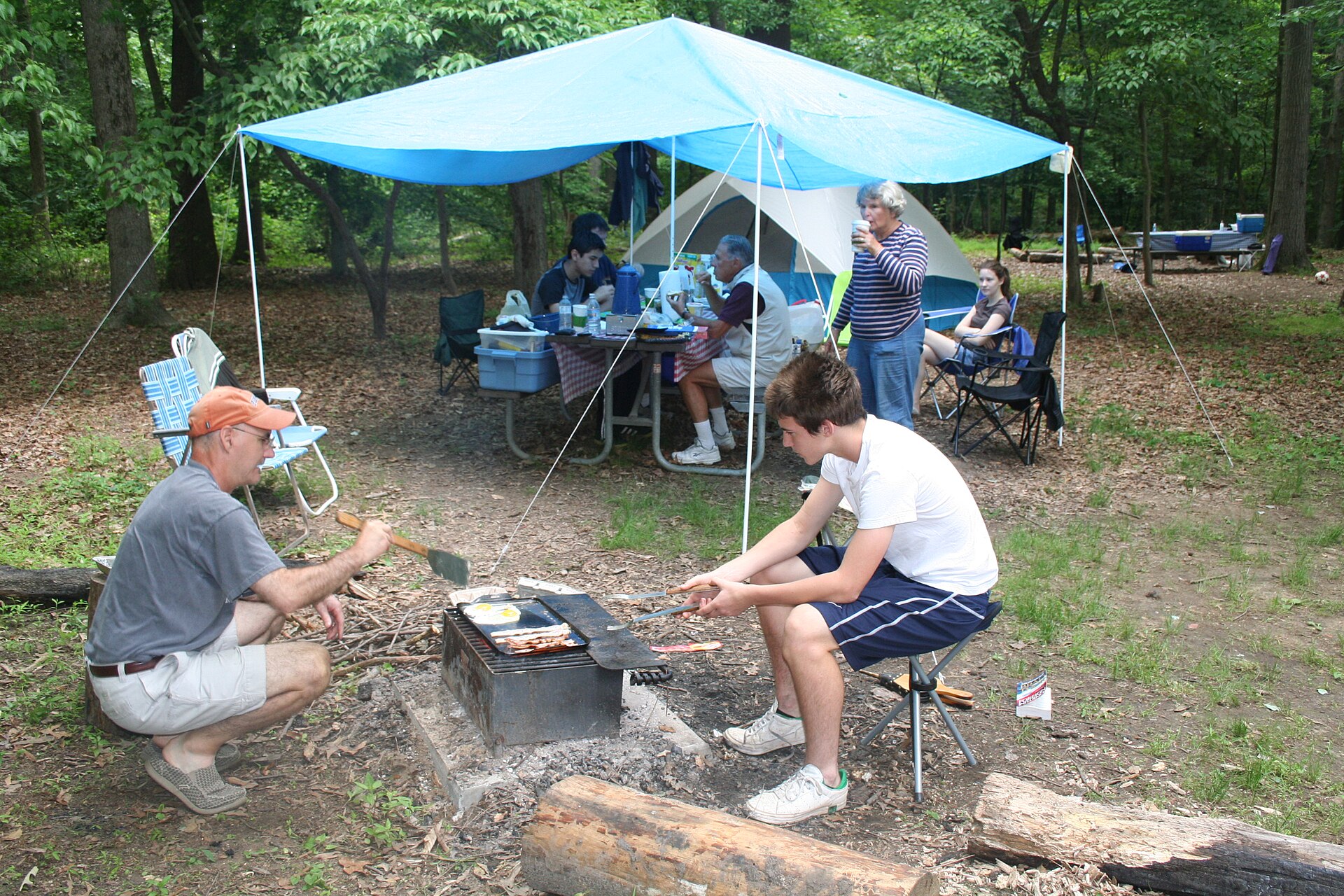
The best camping meals for families are simple, cook in one pan, and use ingredients that overlap from day to day. Pick a few dishes that need no heat, a few that need a stove, and save the fragile food for the first night. This guide shows you how to build that plan for a long weekend at the campground.
What makes a camping meal work for a family?
Start with the constraints. You have a small stove or a fire, one cooler, and limited water for washing up. Kids and teens will both need to eat, and nobody wants to scrub pans in the dark.
A good camp meal passes four tests:
- It cooks in one pot, one skillet or one foil packet.
- It uses few ingredients, and most of them overlap with other meals.
- It needs little chopping on site.
- It tastes good to people who are tired and hungry.
Fancy recipes can wait for home. At camp, reliable beats impressive. Pick meals your family already likes, then adjust them for outdoor cooking.
Think about heat too. Sort every meal into one of three groups: needs a fire, needs a stove, or needs no heat. Fire bans can arrive without warning, so keep at least two no-fire dinners in your plan.
How do you plan a four-night menu around a cooler?
Plan by freshness, not by taste. Foods that spoil easily go first. Foods that last go later.
Here is a simple order:
- Night one: anything with raw meat, fresh fish, or soft produce.
- Night two: meals built on sturdy vegetables and pre-cooked meat.
- Night three: pantry and canned-food meals.
- Night four: whatever is left, plus a simple pasta or rice dish.
Make as much as you can at home. Burgers can be shaped before you leave. Bacon can be cooked ahead, which saves time and grease at camp. Pre-cooked burgers and sausages can even be eaten cold if your campsite has no grill or bans fires.
Overlap your ingredients on purpose. A bag of spinach can go into breakfast wraps and then onto dinner sandwiches. A jar of salsa works in breakfast, quesadillas and burritos. Shared ingredients mean less waste and a lighter cooler.
Freeze what you can. A frozen bag of peas acts as an ice pack, then goes into dinner on day two or three. For ice and packing order, see the guide on keeping food cold for four days.
What are the best camping breakfasts?
Mornings are hungry and slow, so breakfast should be easy. You have three good styles.
No-cook breakfasts
Overnight oats need no heat. Mix oats, milk, yogurt and a sweetener in a jar the night before, then chill them well. Let each person pick their own toppings, such as nuts, fruit, honey or spices. Everyone gets a different breakfast from one base.
Yogurt parfaits and make-ahead baked snacks also work well on a no-stove morning.
One-pan hot breakfasts
Breakfast wraps are a family favourite. Scramble eggs, add cheese and bacon, then fold everything into a tortilla. Add spinach, avocado or salsa for freshness.
French toast is another good option. Mix the egg and milk batter at home and carry it in a sealed jar in the cooler. Use slightly squished bread without worry. Top with fruit, yogurt and syrup.
Foil breakfasts
Breakfast burritos can be assembled at home with eggs, potatoes, sausage and cheese. Wrap them in foil, then warm them on the fire or stove. Nothing needs washing afterward.
For coffee and one-pan methods, see the guide to breakfast at camp.
What should you cook for lunch and dinner?
Lunch should take almost no effort. Dinner can be a little warmer and heartier.
Lunches
- Salad-filled buns or sandwiches, such as a crab or chicken salad on toasted rolls
- No-cook burritos with beans, cheese, lettuce and flatbread
- Cheese and crackers with cut vegetables and hummus
- A bean salad made ahead, which improves as it sits
A cannellini bean salad is a smart make-ahead choice. If you worry about dairy in the cooler, leave out the feta.
Dinners that use a stove
- One-pot pasta: brown sausage, add store-bought marinara, and cook the pasta in the same pot. It needs no chopping.
- Rice and beans: cook the rice right in the starchy bean liquid.
- Quesadillas: fill tortillas with cooked chicken, cheese and salsa, then cook a few minutes per side.
- Tacos: heat mince or canned beans and set up a build-your-own station.
- Chili: a quick-cooking chili is easy to adapt to whatever beans you have.
- Skillet gnocchi: brown store-bought gnocchi, then add cherry tomatoes, garlic and mozzarella.
Dinners that use a fire
Foil packets are the easiest fire dinner. Layer fish or chicken with tomatoes and herbs, wrap it up, and cook it over the coals. You can assemble packets the night before. The foil packet article covers timing, and the Dutch oven guide covers heavier one-pot meals.
Dinners with no heat at all
Plan these for fire bans or tired nights. Cold burgers or sausages made at home, wraps, and bean-and-cheese burritos all work. If a ban hits, the fire ban dinner plan has more ideas.
What do you cook on the second and third night?
This is where plans fall apart. The fresh produce is gone or wilted, and the cooler feels half empty. Prepare for it before you leave.
Build these nights on canned and shelf-stable food:
- Canned beans for tacos, chili, or a skillet dish with eggs poached on top
- Canned tomatoes for a quick stew with chicken or turkey
- Instant ramen made richer with peanut butter, coconut milk and chili crisp
- Rice or pasta as a filling base
- Tortillas, which last well and fill many roles
Sturdy vegetables hold up longest. Carrots, peppers, onions and cabbage can survive several days. Delicate greens and soft fruit should be eaten first.
Kimchi or pickled vegetables are a handy trick. They add crunch and heat to eggs, sandwiches and rice when fresh produce is gone.
Keep one backup meal in the car. Pasta, a jar of sauce and a can of beans can save a bad evening.
How much food does an active family need, and what belongs in a camp bin?
Plan on bigger appetites than at home. Kids and teens who hike, swim and bike all day will eat more at dinner and snack constantly. It is easier to bring slightly extra staples than to run out. Extra rice, pasta and tortillas keep well, so leftovers come home without waste.
Snacks that hold up
- Hard-boiled eggs and pre-made meatballs for protein
- Fruit, banana bread and homemade snack bars
- Cheese, crackers and cut vegetables
- Granola clusters and trail mix
A year-round camp food bin
Keep a plastic bin packed with non-perishables so you never start from zero. Good items to store:
- Cooking oil, salt, pepper and a few spices
- Pancake mix in a shake-up container
- Instant oats or oatmeal mix
- Pasta, rice and tortillas
- Canned beans and tomatoes
- Syrup, jam and peanut butter
- Tea, coffee and hot chocolate
- Foil, zip bags and paper towels
Check dates before each season and replace anything stale. With the bin ready, you only need to shop for perishables before you go.
Finish with something sweet. Berries tossed with sugar and shaken cream make a bright dessert, and grilled fruit in foil with cinnamon is easy. S’mores stay a classic, too.
Related reading
- How to Build a Cooking Fire and Manage a Bed of Coals
- Breakfast at Camp: Four Ways to Make Coffee and the One-Pan Method
Photo: Breakfast in the Greenbelt Park campground, by NPS, Public domain (Wikimedia Commons)