
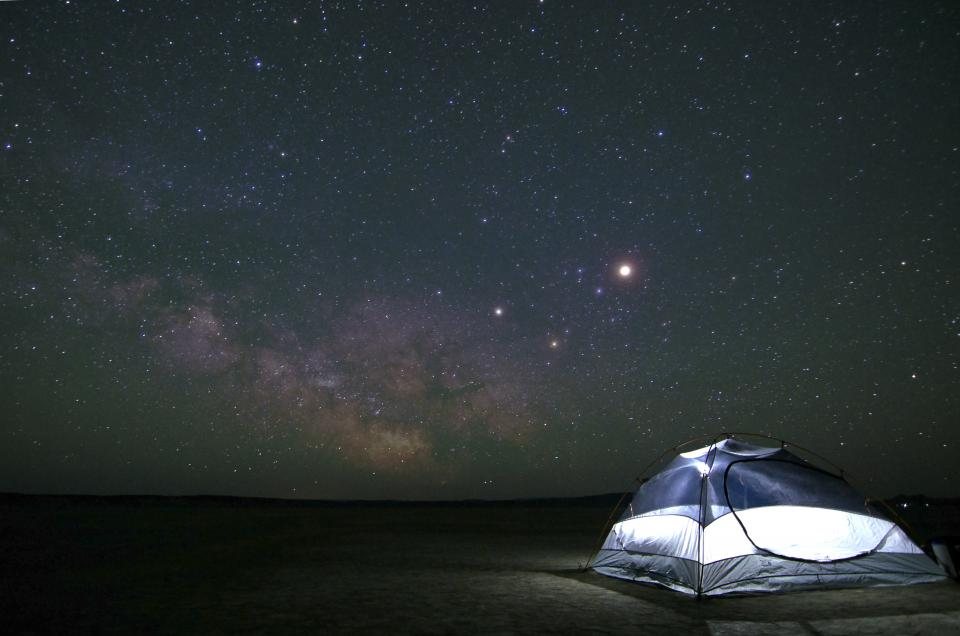
Camping has a reputation for bad sleep that it does not quite deserve. The tent is rarely the problem. The problems are a thin pad, a rolled-up jacket standing in for a pillow, a neighbour’s radio, and a temperature drop nobody dressed for. Each of those has a cheap and simple fix, and once we sorted them out, we started sleeping better under canvas than at home.
The pad matters more than the bag
Ask most first-time campers what kept them cold and they will blame the sleeping bag. It was almost certainly the pad. Lying down compresses the insulation under you to nothing, so whatever is between your back and the ground is doing all the work. The ground in a temperate campground at night is often 10 to 15 C (50 to 59 F), and it will happily pull heat out of you all night long.
Pad insulation is measured with an R-value. For summer car camping, a pad rated R 2 to 3 is comfortable. For spring and autumn nights that drop near freezing, look for R 4 or more. For car camping, weight is irrelevant, so we use thick self-inflating pads 7 to 10 cm (3 to 4 in) deep, which insulate well and cushion hips and shoulders. Air mattresses of the bedroom type are comfortable but uninsulated; put a closed-cell foam pad or a thick blanket on top of one and it becomes a fine bed.
Pad width matters too. Standard pads are about 51 cm (20 in) wide, which is fine for a small sleeper who lies still. Wide pads at 63 to 76 cm (25 to 30 in) suit anyone who rolls, and a double pad is the best answer for a couple, because it removes the crack that one person always ends up in.
Bring a real pillow
A rolled fleece is a lousy pillow, and a lousy pillow means a stiff neck and a broken night. For car camping there is no reason not to bring the pillow from your bed, in a stuff sack or a pillowcase you do not mind getting dusty. If space is tight, an inflatable camp pillow with a fleece top, partly inflated so it is soft rather than a balloon, is the next best thing. Side sleepers usually want it firmer and higher than back sleepers, so adjust before lying down rather than fighting it at midnight.
Earplugs and the sounds of a campground
A campground is noisier than most people expect. There are the neighbours’ conversations that carry perfectly through nylon, the car doors, the dog, the loons on the lake at four in the morning and, in some places, the road. None of it is dangerous and all of it is loud enough to wake a light sleeper.
Foam earplugs are the cheapest sleep upgrade there is. Roll them thin, pull the top of your ear up and back, and slide them in so they expand deep in the canal. Silicone putty plugs work better for people who find foam irritating. We keep a small bag of fresh pairs in the tent pocket, and we make a point of not using them on nights when a child might need us, or when weather might require a trip outside to check the guy lines.
Dressing for a cold night
The temperature at a campground routinely falls 10 to 15 C (18 to 27 F) between late afternoon and dawn, and in mountain valleys or by lakes it can fall further because cold air pools in low ground. The rating on a sleeping bag is a comfort figure for a typical sleeper, and most of us sleep colder than the label assumes. Our working rule is to choose a bag rated about 5 C (10 F) colder than the coldest night we expect.
Inside the bag, a few habits make a bigger difference than the bag itself:
- Change into dry base layers before bed; the clothes you wore all day are damp even if they feel fine.
- Wear a hat and dry socks; a lot of heat leaves through an uncovered head.
- Eat something with fat and carbohydrate an hour before bed so your body has fuel to burn.
- Fill a hard-sided water bottle with hot water, close it tightly and put it by your feet or belly.
- Do not go to bed cold; a two-minute walk or a few squats warms the bag much faster than lying still.
- Keep tomorrow’s clothes inside the bag so they are warm when you put them on.
Two people in a tent warm it by a couple of degrees. Blankets, quilts and a second bag opened up as a duvet all help, and for car camping there is nothing wrong with bringing the duvet from home. What does not help is sealing the tent shut: the air gets damp, condensation drips, and you wake up clammy and colder than before. Leave a vent open.
Managing the night-time bathroom trip
The other great destroyer of camp sleep is the trip to the toilet block. It is cold, it is dark and it is far. We have learned to drink less after eight in the evening, to keep a headlamp and sandals right by the door, and to accept that a quick walk in the dark is better than lying awake for an hour trying not to need one. A wide-mouthed bottle, clearly labelled, is an honest option for adults who would rather not leave the tent.
Routine, timing and the first night
The first night on any trip is usually the worst. New noises, a new bed and the excitement of arriving keep everyone up. We plan around this: no long drive on day two, a lazy breakfast, and low expectations. By the second night the body has adjusted to the sounds and the light, and by the third we are sleeping ten hours and wondering why we ever needed an alarm.
Campground sleep improves with a small routine. Same bedtime, a wash, teeth, a few pages of a book by headlamp and lights out with the sun rather than long after it. Sunlight at dawn resets the clock better than any alarm, and a tent with the fly door facing east means you wake with the light, which is the whole point of sleeping outdoors in the first place.
Read next: Camping Packing Checklist: What Your Family Actually Needs for a Car Camping Trip